Showing posts with label sugar. Show all posts

Tuesday, May 31, 2011

Experts Say You Should Keep Your Athletic Kids Away from Sports and Energy Drinks

Every child involved in sports will have a greater need of rehydration than kids who do not play sports.

A new report says that "there is nothing better than water for that."

Clinical Report
The clinical report, issued by AAP (American Academy of Pediatrics), says that "There is a lot of confusion about sports drinks and energy drinks, and adolescents are often unaware of the differences in these products. Some kids are drinking energy drinks - containing large amounts of caffeine - when their goal is simply to rehydrate after exercise. This means they are ingesting large amounts of caffeine and other stimulants, which can be dangerous."

The report then describes sports drinks and energy drinks.

  • "Sports Drinks - these contain carbohydrates, electrolytes, flavoring and minerals. They are supposed to replace electrolytes and water lost through sweating. Young athletes who are involved in vigorous and prolonged sports may benefit from sports drinks. However, in the majority of cases they are unnecessary."

  • "Energy Drinks - these contain stimulants, such as taurine, guarana and caffeine. Caffeine has been associated with several damaging effects on children, effects which may harm the child's cardiovascular and developing neurologic systems. Energy drinks are totally unsuitable for children and teenagers."

Important points to take home from the above descriptions are that sports drinks are usually unnecessary (we would venture to say ALWAYS unnecessary), and that "energy drinks are totally unsuitable for children and teenagers."

Remember that: "In many cases, it's hard to tell how much caffeine is in a product by looking at the label. Some cans or bottles of energy drinks can have more than 500 mg of caffeine, which is the equivalent of 14 cans of soda" and that: "The carbohydrates in sports drinks may contribute to overweight and obesity risk. There is also the problem of dental erosion."

VitaminWater
On August 5th of 2010 we discussed a Negative Article About VitaminWater on Well-known Newspaper. So no... Your kids should not be drinking VitaminWater either.

After all, did you know that Coca-Cola lawyers say that "no consumer could reasonably be misled into thinking vitaminwater was a healthy beverage." Meaning that there is no reason anyone should think VitaminWater is healthy.

Article:
[Medical News Today]: Energy Drinks Contain Substances That Can Harm Sporty Children

Wednesday, April 14, 2010

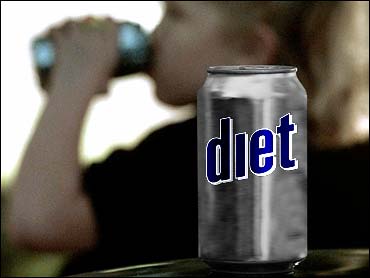
Scientific Reasoning Behind Drinking Diet Soda

Well, there is none!

Ask people who drink diet soda and they will probably answer one or all of the reasons below for why they drink them. We asked someone who happened to tweet about going out for a Diet Coke:
  1. They like soda but do not want the added sugar.

  2. They are recommended in all diets (for losing weight).
It is possible that there is a third reason, which did not come from this specific twitter user but from knowing quite a few diabetics. Diet soda, because it lacks sugar, is better for diabetics and therefore recommended by many nutritionists and doctors.

These reasons sound valid but consider the following:
Sugar is a substance that you body knows and can get rid of. Whatever is used to sweeten sugar-free drinks is chemical-based and may do more harm than sugar because it is foreign to your body.

Here are responses to the three reasons listed above:
  1. Do you really "like" soda or are you addicted to it? Recent research has indicated that many unhealthy foods trigger similar effects in your brain as does cocaine and heroine.1 What you may interpret as necessary and something you like can in fact be the same exact way a drug addict justifies using more drugs (please note that cocaine and heroin are considered hard drugs).

  2. A lot of nutritionists, dietitians, and doctors recommend diet sodas to their patients. The idea is that a lower intake of sugar will lower the patients' weight gain. There is no evidence that this is so. In fact, research indicates that diet soda INCREASES your appetite.2 Seems to completely contradict the purpose of getting on a diet (we won't even get into how awful these short term weight-loss diets are for you).

  3. Lastly, diet soda for diabetics. Makes sense, right? Less sugar, better management of blood glucose levels, right? This morning when we read a retweet by @AnnChildersMD that said diet soda is now linked to metabolic syndrome and type two diabetes. The article, which is on the National Health Institute's news health website3 says "A new study has implicated meat, fried food and, surprisingly, diet soda in the development of metabolic syndrome." We looked for the actual study and found one that dates back to April of 2009. They concluded that "consumption of diet soda at least daily was associated with significantly greater risks of select incident metabolic syndrome components and type 2 diabetes."
Our Thoughts
If you like drinking soda, analyze the reason why you like it. Stop drinking it for a month and see if you crave it. This is the only way you will know if you are in complete control. If you at any point in time miss it, be careful because you may only THINK you like it. The body is amazing that way.

Why do health professionals suggest drinking diet soda for weight loss? Simple. They are misinformed. This is a fairly new study and most practicing professionals graduated before 2009 and probably have never sat down to catch up on new discoveries in the health field. Stop drinking soda for a month and see if your appetite decreases.

Diabetics... It is time you stop drinking (and eating) what you like, and you start drinking (and eating) what you have to. There is no simple way to sugar coat that message. That's it. You need to stop and take control. Here's an analogy that might help. Would you put diet soda (or regular soda) in your car's gas tank? I think you answered "no". Why? Your car doesn't run on soda! It's almost ridiculous to have to explain that one, right? Guess what... Your body doesn't run on soda either. Do you care more about your car than you do your body?

Our message
Stop drinking sodas altogether. There are plenty of alternatives. What ever happened to homemade lemon aide (real, you squeeze lemons add the water and brown sugar)? What about this quick and easy (2 minute) delicious strawberry and blueberry drink: http://twitpic.com/1exyle?

Start taking care of you as much as you take care of your car.

If you are interested in your health and nutrition, follow us on twitter (@glycotrainer) and subscribe to the RSS Feed that belong to this blog and our site, GlycoTrainer.com.

Sources:
[1] Junk Food 'Addiction' May Be Real
http://news.yahoo.com/s/hsn/20100328/hl_hsn/junkfoodaddictionmaybereal

[2] People who drink diet soft drinks don't lose weight. In fact, they gain weight, a new study shows
http://www.foxnews.com/story/0,2933,159579,00.html

[3] NIH News in Health
http://newsinhealth.nih.gov/2008/April/docs/02capsules.htm

[4] PubMed :: Diet soda intake and risk of incident metabolic syndrome and type 2 diabetes in the Multi-Ethnic Study of Atherosclerosis (MESA)
http://www.ncbi.nlm.nih.gov/pubmed/19151203

Friday, March 19, 2010

Glycobiology & Synthetic Bacteria


For years we have said that the future of medical and health-related research is in the study of sugars and sugar-containing molecules (ie. glycoproteins, glycolipids, etc.).

"Researchers have devised a way to attach sugars to proteins using unique biological and chemical methods. This means that large quantities of different glycoproteins can be generated for various medical and biological studies."

Recently, a paper was published in the journal Nature Chemical Biology in which it was reported that a bacteria (Campylobacter) could do something that was believed could only be done by animal/plant cells (eukaryotes). E. coli has always been used for research but is unable to glycosylate (add monosaccharides to other molecules).

"PhD student Flavio Schwarz from Professor Markus Aebi's group at the Institute of Microbiology of ETH-Zurich and researchers from the University of Maryland have developed a new method for producing glycoproteins." They have taken the glycosylation mechanism from Campylobacter and introduced it to E. coli. E. Coli will now be able to glycosylate.

What is so important about glycosylated molecules like glycoproteins?
"If you want to study host-pathogen interactions, for instance, you need pure samples of a particular glycoprotein, whereas natural systems can only offer researchers a highly complex blend of such substances." ALL pathogens interact and attach to human cells through carbohydrates on glycosylated structures.

"Glycoproteins play a crucial role in biology. They are found more frequently on the surface of cells than 'normal' proteins and they participate in numerous cellular processes, such as cell to cell communication. They are present throughout the human body, also in mucus, and the different glycosylation of blood proteins contribute to define the blood group antigen." Cell to cell communication is also called intercelullar communication.

What does the future hold?
"...has great potential for the development of new cancer treatments. These therapeutic glycoproteins can be produced specifically-tailored to remain in the bloodstream longer while targeting cancerous cells." The immune system uses glycoproteins to distinguish between rogue and normal cells.

"For now, we have simply managed to prove that our concept works. It remains to be seen what potential practical applications it might have," says Flavio Schwarz from the Life Science Zurich Graduate School."

Article [ScienceDaily: Synthetic Biology: Engineered Bacteria

Related Information
Glyconutrientes
Glycobiology
Essential Monosaccharides
Intercellular Communication