Tuesday, June 28, 2011

Mexico's "Queso Fresco" has Antihypertensive Activity

A study was conducted by the Eastern Regional Research Center, Agricultural Research Service, US Department of Agriculture. They state that "Hispanic-style cheeses are one of the fastest growing varieties in the United States, making up approximately 2% of the total cheese production in this country. Queso Fresco is one of most popular Hispanic-style cheeses."

The Study
Proteins from 18 different "queso fresco" cheeses were analyzed for potential antihypertensive activity. 6 were Mexican-style "queso fresco," made from raw milk, 12 were made from pasteurized milk and did not utilize starter cultures.

Researchers were looking for the proteins' ability to inhibit the angiotensin-converting enzyme (ACE) - an enzyme that participates in vasoconstriction (narrowing of blood vessels).

Cheeses were aged, and proteins were extracted periodically.

The Results
All cheeses produced ACE-inhibiting proteins.

The 6 Mexican style "queso fresco" cheeses stood out, however - the proteins were found only a few days after being aged. The model cheeses, made from pasteurized milk, produced these same results "after 8 weeks of aging when they were no longer consumable."

Abstract:
[PubMed]: Short communication: Assessing antihypertensive activity in native and model Queso Fresco cheeses

Thursday, June 23, 2011

Intense Exercise Better Than Endurance Training

A recent study identified "high intensity exercise [to be] more beneficial than traditional endurance training" for those concerned about their cardiovascular health.

The study
47 boys and 10 girls volunteered for the study. The kids were randomly assigned to two groups - the moderate intensity group and the high intensity group.

Both groups performed 3 exercise sessions a week for 7 weeks. The moderate intensity group was asked to jog, non-stop, for 20 minutes while the high intensity group was asked to run a series of 20m sprints in a period of 30 seconds.

By the end of the study the moderate intensity group had 420 minutes of exercise and the high intensity group had only done 63 minutes. The moderate intensity group had burned an approximate 4,410kcals while the high intensity group had only burned 907.2kcals.

The Results
"The results revealed that both groups demonstrated improved CVD risk factors. However, the total exercise time over seven weeks was six times higher for the MOD group compared to the HIT group. Thus, significant improvements in CVD risk factors in the HIT group occurred in only 15% of the total exercise time."

This states that the body benefits MOST from high intensity training - kids in the high intensity group had same results in less than a fifth of the time as the kids in the moderate intensity group. This suggests that, "brief, intense exercise is a time efficient means for improving CVD risk factors in adolescents."

Article:
[Medical News Today]: Better A Sprint Than A Marathon: Brief Intense Exercise Better Than Endurance Training For CVD

Thursday, June 9, 2011

Roxarsone, Poultry, and Your Health

News that Roxarsone will no longer be used in poultry hit the web today.

Roxarsone is a 67 year-old drug that has been administered to poultry to protect it against certain diseases. Pfizer (Roxarsone's manufacturer), along with the FDA, opted to stop giving the medication to poultry because the compound contains levels of organic arsenic that can convert into inorganic arsenic which is known to cause certain cancers.

It doesn't look like there will be a recall of any chicken. "FDA officials stress that the levels of inorganic arsenic detected were very low and that continuing to eat chicken as 3-Nitro is suspended from the market does not pose a health risk." And really... why should there be a recall? We've been eating this junk for decades.

Is There a Cover-up on the Way?
We're not advocates of conspiracies but we did find it odd that for the first time, the Medical News Today displays a 404 (page not found) error when following links from Google and Twitter.

Here are three screen shots (one of Google, one of the tweet, and one of the page).

Google Results Screenshot


Tweet that Informed Us About this


Error Page on Medical News Today


Article:
[LA Times]: Arsenic-containing drug in chicken feed to be pulled from U.S.

Tuesday, June 7, 2011

Potassium-to-Sodium Ratio

Recent literary reviews suggest that salt balance may be key to preventing heart disease.

Literary Review
"Americans are consuming too much sodium and not enough potassium."

"This imbalance is taking a toll in the form of higher rates of heart disease and stroke, the first and third most deadly diseases in the U.S., respectively, according to the Centers for Disease Control and Prevention."

The article names some fruits and vegetables that are good potassium sources. The idea is that if you eat these foods you will increase your potassium intake, balancing your potassium-to-sodium ratio.

Why is this important? According to the article, recent scientific research suggests that it is low potassium-to-sodium ratio that damages the heart, and not necessarily a person's total sodium intake.

Article:
[Medical News Today]: High Potassium-To-Sodium Ratio May Reduce Risk Of Cardiovascular Disease

Tuesday, May 31, 2011

Experts Say You Should Keep Your Athletic Kids Away from Sports and Energy Drinks

Every child involved in sports will have a greater need of rehydration than kids who do not play sports.

A new report says that "there is nothing better than water for that."

Clinical Report
The clinical report, issued by AAP (American Academy of Pediatrics), says that "There is a lot of confusion about sports drinks and energy drinks, and adolescents are often unaware of the differences in these products. Some kids are drinking energy drinks - containing large amounts of caffeine - when their goal is simply to rehydrate after exercise. This means they are ingesting large amounts of caffeine and other stimulants, which can be dangerous."

The report then describes sports drinks and energy drinks.

  • "Sports Drinks - these contain carbohydrates, electrolytes, flavoring and minerals. They are supposed to replace electrolytes and water lost through sweating. Young athletes who are involved in vigorous and prolonged sports may benefit from sports drinks. However, in the majority of cases they are unnecessary."

  • "Energy Drinks - these contain stimulants, such as taurine, guarana and caffeine. Caffeine has been associated with several damaging effects on children, effects which may harm the child's cardiovascular and developing neurologic systems. Energy drinks are totally unsuitable for children and teenagers."

Important points to take home from the above descriptions are that sports drinks are usually unnecessary (we would venture to say ALWAYS unnecessary), and that "energy drinks are totally unsuitable for children and teenagers."

Remember that: "In many cases, it's hard to tell how much caffeine is in a product by looking at the label. Some cans or bottles of energy drinks can have more than 500 mg of caffeine, which is the equivalent of 14 cans of soda" and that: "The carbohydrates in sports drinks may contribute to overweight and obesity risk. There is also the problem of dental erosion."

VitaminWater
On August 5th of 2010 we discussed a Negative Article About VitaminWater on Well-known Newspaper. So no... Your kids should not be drinking VitaminWater either.

After all, did you know that Coca-Cola lawyers say that "no consumer could reasonably be misled into thinking vitaminwater was a healthy beverage." Meaning that there is no reason anyone should think VitaminWater is healthy.

Article:
[Medical News Today]: Energy Drinks Contain Substances That Can Harm Sporty Children

Tuesday, May 24, 2011

INSANE: Doctors Testing Diabetes Medication to Prevent Overweight Newborns

We could hardly believe it when we first read this...

According to the article, a doctor would like to use metformin, a diabetes medication, to prevent the birth of an overweight child. The reasoning behind this INSANE trial is to "keep potentially pudgy babies from tipping the scales too high at birth, which can expose them — and their moms — to serious complications and lifelong problems".

The Study
There are 75 women in the study group currently but the goal is to reach 2,178 and have the trial conducted by different doctors in eight different sites.

The women will be split into two groups. Both groups will follow a diet and exercise routine but one group will be given 300mg of metformin each day while the second group receives a placebo.

The study hasn't been completed so no results have been posted. But the doctor behind this trial hopes to have a significantly lower newborn obesity rate in the group taking the medication than the group taking the placebo.

Our Reaction
OMG! This lady should have her medical license taken away from her!

Here's why... Metformin "decreases the amount of glucose you absorb from your food and the amount of glucose made by your liver."[1]

This doctor lacks logic. What's more shocking is that women actually signed up to be a part of this study!

How ironic is it that metformin could lead to hypoglycemia (low blood sugar) which could, in turn, lead to hunger?

Fiber slows down the rate of sugar absorption in the intestine... What ever happened to telling pregnant women not to eat junk food? How about recommending a diet based on the glycemic index? We don't know if fiber of the glycemic index are the answers... But we KNOW medication that carries long-term risks is not the answer (this according to experts interviewed for the article).

Article:
[MSNBC]: Obese fetus? Let mom pop a pill, doc says

References:
[1] PubMed Health - Metformin

Saturday, May 21, 2011

Turns out "Bad" Cholesterol isn't so Bad Afterall

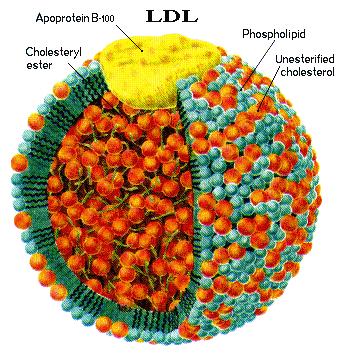
A Texas A&M study suggests that LDL isn't as bad as it has been made out to be. Researches said that new attitudes need to be adopted with regard to LDL.

The Study
52 healthy adults, ages 60 to 69, with no physical activity were told to do vigorous workouts. After the workout, those with higher muscle mass were the ones with the highest levels of LDL (the "bad cholesterol").

What the Scientists Concluded
"It shows you do need a certain amount of LDL to gain more muscle mass. There's no doubt you need both - the LDL and the HDL - and the truth is, it [cholesterol] is all good. You simply can't remove the 'bad cholesterol' from your body without serious problems occurring."

"...the more LDL you have in your blood, the better you are able to build muscle during resistance training."

Link to article:
[Medical News Today]: Study Suggests That 'Bad' Cholesterol Is Not As Bad As People Think