Sunday, June 6, 2010

Stop Drinking your Protein Supplement Until you Read This


In it's July 2010 issue, Consumer Reports has issue a statement of concern against 15 very popular protein drinks.

The report indicates that the protein may be unnecessary and that there are heavy metal contaminants in these popular protein drinks.

It is very important that you not purchase ANY supplement based on price. If you are looking to save money, don't buy anything. As mentioned in the "Homeopathic and Allopathic Approaches" page on our site, "In May of 2009, Sports Illustrated published an article that mentioned that there are more than 5,000 companies that sell supplements 'but only a dozen companies have volunteered their products for certification.' Without this certification, you are playing a form of Russian roulette."

Unnecessary protein
What do they mean? Aren't soy and whey protein good for everyone? The protein is good, however the American diet already offers more than the recommended .8grams of protein for every kg in weight (1kg = 2.2lb). The body does not store excess protein. When you drink this (especially close a meal) the body will use as much as it can for muscle. If there is an excess, it will convert as much as it can (and as much as it needs to) into glucose, the rest is immediately removed from the body via urine. So most of the protein simply passes through your body without doing anything. You are literally peeing your money away (as with most supplements that are not absorbed by the body).

Contaminants
This is very bad. Inexpensive supplements are very likely to not follow Good Manufacturing Process (GMP) protocols. This allows for a variation in nutritional content from dose to dose but even worse... It allows for contaminant, in this case heavy (lethal) metals, because there is no process set into place that removes these and later checks before packaging. There have been several reports of people overdosing on vitamins and minerals because a pill had 200 times the amount that the label said. The product is not standardized... Some pills could have a lot more than supposed to and some pills could have none. But heavy metals should never be present. Do not purchase products based on price because one supplement is almost never the same as the next.

Heavy metals can kill you.

Our recommendation
That you try this whey protein blend. The manufacturer follows the strictest GMPs for all of their products. It has since the beginning. It is one of those 12 companies that Sports Illustrated says have voluntarily asked for NSF International certification. While not all of the products have been evaluated by NSF International those that have, passed with flying colors. All products are manufactured by the same quality assurance guidelines (it just takes time and a lot of money to get all products certified). This will eliminate the heavy metal scare...

But what about the fact that we are already getting enough protein? These scientists thought of that. They found active peptides in whey protein and removed them using natural enzymes. A peptides is a shorter chain of amino acids than a protein. Most of the whey protein is discarded in the process. Instead, you get a serving of the specific amino acids that have been scientifically proven to help eliminate fat and reduce muscle loss during diet and exercise.

This advanced peptide technology has four mechanism by which it aids in fat loss.

Articles:
[Consumer Reports]: Alert: Protein drinks
[Sun Warrior Blog]: Arsenic in Your Protein Shake?

Still not convinced that this whey protein blend is superior to other "similar" products sold in stores? This product comes with a 6 month money back guarantee... Who else believes in their products enough to offer a guarantee like this? Contact us for more information, including a video with a scientific explanation of how the product works and three clinical trials that were completed before the product was released.

Friday, June 4, 2010

News Report: 2yr Old Baby Smoke 2 Packs a Day. Why did so many of you get mad at the parents?

A few days ago this video of a two year old smoking 40 cigarettes a day was sent all over the web.


The kid started to smoke because his father TAUGHT him to smoke. Critics said the parents should be thrown in jail, other said they should get the "s**t slapped out of them", and so on. We agree...

But it got us thinking...
Shouldn't we do the same to parents who TEACH their kids about happy meals and that fast foods are okay to consume?

After all, certain health experts believe that "One French fry is worse for you than one cigarette, so swapping your pack for an extra value meal a day is NOT a good choice."1

Lesson to learn
Kids don't know about fast food vs health food. They simply trust you and believe in what you teach them. But once you get addicting chemicals in them (as are found in cigarettes and fast food2) they will, as the video says, "gets crazy, screaming, banging his head on the floor, even getting sick if he doesn't get his two packs a day". Next time your kid throws a fit because he would rather eat chicken nuggets for breakfast, you know why.

And no one is to blame but you (the parent) for teaching them this unhealthy habit that may have got them hooked for life

Sources:
[1] Mercola, J. Healthbit. Twitter. 7:00 AM Jun 2nd via HootSuite. http://twitter.com/mercola/status/15253111238

[2] Junk Food 'Addiction' May Be Real
http://news.yahoo.com/s/hsn/20100328/hl_hsn/junkfoodaddictionmaybereal

Sunday, May 30, 2010

Food... As Medicine?

Surprising statement, no? But why? After all, Hippocrates (an ancient Greek considered to be the father of modern-day medicine) is quoted as saying, "Let food be thy medicine and medicine be thy food".

So it was no surprise to us when we read a recent article from Medical News Today that talked about how doctors are turning to food high in soy protein, phytosterols, and other nutrients as a means to fight metabolic syndrome. "Doctors are stymied about how to treat it. Billions of dollars are spent on it-unnecessarily" is what the article says. Stymied is a synonym of stumped.

According to the article, metabolic syndrome is "the simultaneous occurrence of any three or more of the following five conditions: high blood pressure, high blood sugar, abdominal obesity, low HDL ("good") cholesterol, or high triglycerides".

The Result of the Study
"The research findings indicate that this combination of plant-based nutrients can be a powerful enhancement to lifestyle therapy." This indicates that improving your eating habits, increasing your daily activity, and ingesting a higher quantity of certain nutrients can in fact reverse many problems that are literally stumping doctors who strictly prescribe medications to their patients with metabolic syndrome.

Survey Results
The article also provides survey results... Unfortunately, they "indicate that physicians feel ill-equipped to help their patients make significant lifestyle changes that will improve their health. Rather, their training and education prepare them to prescribe multiple drugs or even surgery."

Don't wait... It is your responsibility and not that of your doctor(s). Change your eating habit. Participants in this study were fed "low glycemic load Mediterranean-style diet" and encouraged to do "regular, moderate exercise". But remember that key nutrients are essential to see increased results.

Article [Medical News Today]: Food Fight! Battling The Effects Of Unhealthy Diets-with Food!

Thursday, May 27, 2010

Bacteria and Obesity


In numerous posts before we have stated that obesity has very little to do with calories going in vs calories going out.

We have pointed you in the direction of maintaining a healthy body and the body will consume its accumulated fat as it needs to, in a slow and healthy manner. No drugs, no tricks, just give the body what it needs, stop giving it what it doesn't need, and increase your activity.

But these lifestyle changes will only get you so far. You need to supplement. First, with our peptide blend. Next, with our antioxidants and phytosterols. And now, research published this morning suggests that you will also benefit from taking a probiotic.

See... There are several systems that have a say in how much fat you burn and how much you store. Your endocrine system (hormones) has a lot to do with this. It almost completely dictates what to store, when, and where. If a single hormone in any of these processes is off, it will manifest as either too much store or excessively fast utilization. The circulatory system takes care of moving the fats that for burning or storage. The digestive system breaks down the food we eat and releases essential nutrients.

It is in the digestive system that probiotics do their job... In the gut! We have millions of bacteria inside the gut and we needs to replenish them on a regular basis. According to the study, "The researchers also found that in people with certain genetic variations in taste receptor genes, a low level of bacterial diversity in the gut correlated with a higher likelihood of obesity, while a high level of bacterial diversity correlated with a lower likelihood of obesity."

The more diverse of a culture you have in your intestine, the better. See, in the gut, these bacteria will compete with one another for resources (foods we eat). And when one is dying off, another kinds will rush in and take their food and kill it off. Bacteria are at constant war with each other for resources. They want to survive along with their "family" (same bacterial types).

Article [Medical News Today]: http://www.medicalnewstoday.com/articles/190022.php

There are lots of probiotic supplements sold in stores... Sad thing is that the majority of these do not have a full spectrum of bacteria and in many cases, the bacteria is dead because there was little or no food added to the capsules or the powders.

Our probiotic supplement is guaranteed to have live bacteria. Contact us for a quick explanation this probiotic supplement, our fat-loss system, or our optimal health system.

Monday, May 24, 2010

Huge Steps in Glycomics & Glycobiolgy

As defined on our web site, glycobiology "refers to the study of biological sugars". Glycomics encompasses the method by which these sugars are studied.

For years we have known about genetics which is the study of genes. We have also known about proteomics which is the study of proteins. These fields are extremely complicated to understand but incredibly easy to study in the sense that DNA and protein sequences can (and have been for many years) be synthesized because of molecule association.

Let me explain. DNA has three major components:
  1. Deoxyribose (a 5-carbon sugar; D in DNA)
  2. Phosphate (creates bond between deoxyribose molecues to form backbone)
  3. Nucleic Acids (A, C, G, T; NA in DNA)
A is for adenine, C for cytosine, G for guanine, T for thymine. Hydrogen bonds between these four nucleotides hold DNA's double helix together as can be seen in this picture:


Pay close attention and you will notices that a big nucleotide (purine) always binds to a small nucleotide (pyrimidine). The specificity goes into even more exactitude! Not only can you predict that an A and G will always bind to a C or T, but you can predict that an A will ALWAYS bind to a T and a G will ALWAYS bind to a G. That's just the way it is. In DNA, no other nucleotides are present and other combination exists. Geneticists can fairly easily (although concept or procedure might be complex for non-biologists).

The same predictability is true in the study of proteins (proteomics). An amino acid has two end points which can attach to other amino acids to form (not fold) an oligopeptide, a true peptide, or a protein. Here is a list of the 20 amino acids in the human body:


Do you see the H3N+ and COO- at the top of each of the diagrams? The amino group (H3N+) from one amino acid will ALWAYS bind to the carboxylic acid group (COO-) of another. The only exception is when folding, other interactions can occur between sides groups but the protein backbone (line of H3N+ to COO-) linkages between amino acids) is not modified during fold/unfolding. Again, having a predictable pattern for linkage has facilitated the creation of proteins in labs for research purposes.

Sugar on the other hand has no such predictability... Or at least it didn't. Yesterday, ScienceDaily reported that scientists from the University of Georgia had found a way to synthesize complex carbohydrate structures in a much faster, more accurate process than ever before.

Why is this important?
Direct quote from article:
"The emerging field of glycomics has been severely hampered by a lack of robust, well-defined libraries of carbohydrate molecules, which are greatly needed to decipher the 'carbohydrate codes' used by cells for processes such as cell signaling, embryogenesis and neuronal development," said Pamela Marino, director of the glycobiology portfolio at the NIH's National Institute of General Medical Sciences.

This article linked to a similar article (March 23, 2009) in which German scientists boasted of having created "a device that builds these intricate [sugar] molecules in a few hours — rather than the months or years required with existing technology." This second article talks about the direct links to possible vaccines and medications that can spawn from this advancement.

Article [ScienceDaily]: New Method for Producing 'Libraries' of Important Carbohydrate Molecules
Article [ScienceDaily]: First Automated Carbohydrate 'Assembly Line' Opens Door To New Field Of Medicine

It's time you look at sugar a different way. Not all sugar is sucrose (table sugar) or glucose (fuel source and responsible for insulin secretion). No... Instead, glycobiology has been referred to by many prominent doctors as the latest frontier in medical and scientific research. To learn more about it, visit our site. Glyconutrients are eight essential sugars commonly found on surfaces of cells in the human body.

Sunday, May 23, 2010

Subliminal Messages in Food Labels II

On March 14th of this year, we wrote about six food claims that may be easily manipulated by vendors and marketers.

Recently we came across an article on The Daily Green website that listed 5 additional areas of concern that were not mentioned in the article we previously wrote about. These are:

  1. Ingredients - Companies will often break up ingredients by name and not by substance. Ingredients are listed in order, from highest to lowest, of amount present in product. The example given is sugar. No one wants to say their single-most ingredient is sugar. So manufacturers will break it down into things like high-fructose corn syrup, corn syrup, glucose, white grape juice concentrate. These are all different ways to say sugar with an extremely high glycemic index, sugar with a high glycemic index, sugar with a high glycemic index respectively.

  2. Serving Size - Many times what we think are single serving packages actually contain more than one serving. Example soda. While it may be easy to carry a 12oz soda can or 12-20oz plastic bottle, the "Standar Serving Size" is 8oz. So there are 1.5 servings in a soda can and 2.5 in a 20oz bottle. Be sure to multiply nutritional values by that much when thinking of consuming the whole thing.

  3. Omega-3 - There are two ways a product which contains Omega-3 can advertise that it has Omega-3. One is by saying it contains Omgega-3's and another is by indicating that the product can reduce risk of coronary heart disease. To make the health claim the product must contain Omega-3's but must also be low in saturated fats and other risk factors. Be careful... "Omega-3" does not necessarily mean that the product is good for you (or your heart).

  4. 0 Trans Fat - Read the label! Many products that openly advertise "0 Trans Fats" have high amounts (replaced trans fats) of saturated fats. Saturated fats are essentially just as bad.

  5. Free Range Eggs - There is no way to determine if this is true as the government has not regulated this claim for eggs.


Aticle [The Daily Green]: 9 Food Label Lies

Wednesday, April 14, 2010

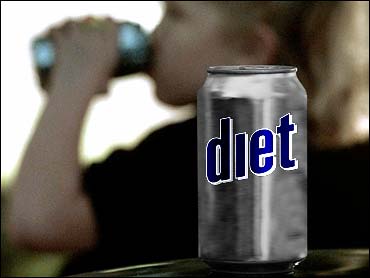
Scientific Reasoning Behind Drinking Diet Soda

Well, there is none!

Ask people who drink diet soda and they will probably answer one or all of the reasons below for why they drink them. We asked someone who happened to tweet about going out for a Diet Coke:
  1. They like soda but do not want the added sugar.

  2. They are recommended in all diets (for losing weight).
It is possible that there is a third reason, which did not come from this specific twitter user but from knowing quite a few diabetics. Diet soda, because it lacks sugar, is better for diabetics and therefore recommended by many nutritionists and doctors.

These reasons sound valid but consider the following:
Sugar is a substance that you body knows and can get rid of. Whatever is used to sweeten sugar-free drinks is chemical-based and may do more harm than sugar because it is foreign to your body.

Here are responses to the three reasons listed above:
  1. Do you really "like" soda or are you addicted to it? Recent research has indicated that many unhealthy foods trigger similar effects in your brain as does cocaine and heroine.1 What you may interpret as necessary and something you like can in fact be the same exact way a drug addict justifies using more drugs (please note that cocaine and heroin are considered hard drugs).

  2. A lot of nutritionists, dietitians, and doctors recommend diet sodas to their patients. The idea is that a lower intake of sugar will lower the patients' weight gain. There is no evidence that this is so. In fact, research indicates that diet soda INCREASES your appetite.2 Seems to completely contradict the purpose of getting on a diet (we won't even get into how awful these short term weight-loss diets are for you).

  3. Lastly, diet soda for diabetics. Makes sense, right? Less sugar, better management of blood glucose levels, right? This morning when we read a retweet by @AnnChildersMD that said diet soda is now linked to metabolic syndrome and type two diabetes. The article, which is on the National Health Institute's news health website3 says "A new study has implicated meat, fried food and, surprisingly, diet soda in the development of metabolic syndrome." We looked for the actual study and found one that dates back to April of 2009. They concluded that "consumption of diet soda at least daily was associated with significantly greater risks of select incident metabolic syndrome components and type 2 diabetes."
Our Thoughts
If you like drinking soda, analyze the reason why you like it. Stop drinking it for a month and see if you crave it. This is the only way you will know if you are in complete control. If you at any point in time miss it, be careful because you may only THINK you like it. The body is amazing that way.

Why do health professionals suggest drinking diet soda for weight loss? Simple. They are misinformed. This is a fairly new study and most practicing professionals graduated before 2009 and probably have never sat down to catch up on new discoveries in the health field. Stop drinking soda for a month and see if your appetite decreases.

Diabetics... It is time you stop drinking (and eating) what you like, and you start drinking (and eating) what you have to. There is no simple way to sugar coat that message. That's it. You need to stop and take control. Here's an analogy that might help. Would you put diet soda (or regular soda) in your car's gas tank? I think you answered "no". Why? Your car doesn't run on soda! It's almost ridiculous to have to explain that one, right? Guess what... Your body doesn't run on soda either. Do you care more about your car than you do your body?

Our message
Stop drinking sodas altogether. There are plenty of alternatives. What ever happened to homemade lemon aide (real, you squeeze lemons add the water and brown sugar)? What about this quick and easy (2 minute) delicious strawberry and blueberry drink: http://twitpic.com/1exyle?

Start taking care of you as much as you take care of your car.

If you are interested in your health and nutrition, follow us on twitter (@glycotrainer) and subscribe to the RSS Feed that belong to this blog and our site, GlycoTrainer.com.

Sources:
[1] Junk Food 'Addiction' May Be Real
http://news.yahoo.com/s/hsn/20100328/hl_hsn/junkfoodaddictionmaybereal

[2] People who drink diet soft drinks don't lose weight. In fact, they gain weight, a new study shows
http://www.foxnews.com/story/0,2933,159579,00.html

[3] NIH News in Health
http://newsinhealth.nih.gov/2008/April/docs/02capsules.htm

[4] PubMed :: Diet soda intake and risk of incident metabolic syndrome and type 2 diabetes in the Multi-Ethnic Study of Atherosclerosis (MESA)
http://www.ncbi.nlm.nih.gov/pubmed/19151203